 EN

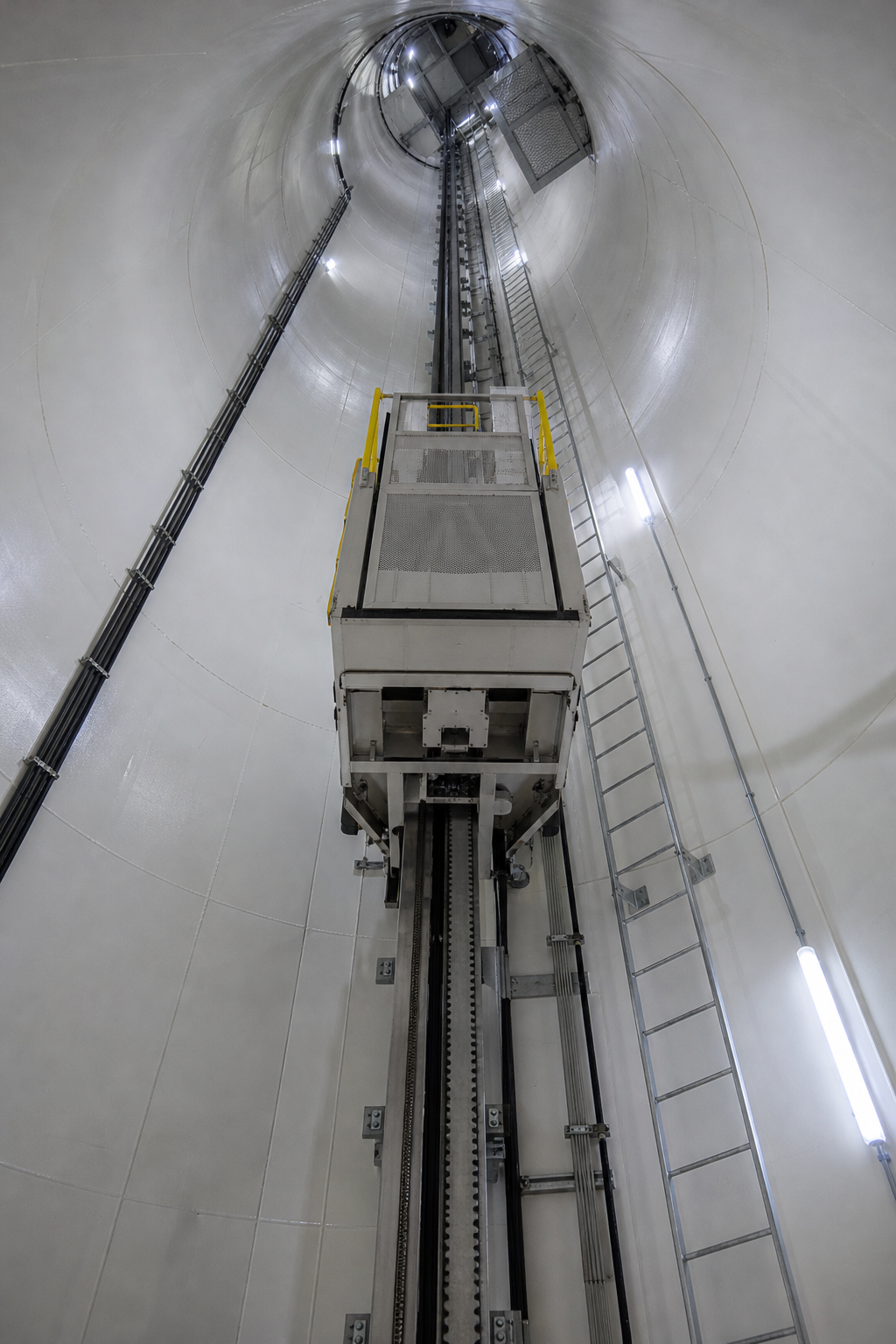
Service lift inside a wind turbine tower
Climbing a 100-metre tower ladder several times a day is a safety and productivity problem. Service lifts solve it - with either a wire rope or a rack.
Two ways to climb a tower
Rope-driven service lifts hang the cabin from a wire rope anchored at the top, with a traction hoist on the cabin and a separate safety rope. Rack-and-pinion lifts run on a guide rail fixed to the tower, with a rack along the rail. A motor-driven pinion on the cabin climbs the rack, and a safety device with its own pinion engages the same rack - the arrangement used on construction hoists.
| Wire rope lift | Rack and pinion lift | |
| Guidance | Guide wires or rails | Rigid guide rail with rack |
| Drive | Traction hoist on rope | Pinion climbing the rack |
| Safety | Separate safety rope and arrester | Safety device pinion on the rack |
| Installation | Rope anchored at top | Rail and rack segments on every tower section |
What the rack must deliver
· Continuous pitch across segment joints over the whole tower height.
· Wear resistance for frequent short trips during maintenance campaigns.
· Corrosion protection against condensation inside the tower and salt air offshore.
· Traceability: material and heat-treatment records for a safety-related component.
Standards
Lift design, safety devices and certification are the lift manufacturer's responsibility. In North America, elevators permanently installed in wind turbine towers are covered by ASME A17.8 / CSA B44.8; European projects follow the applicable machinery and lift requirements. Component suppliers build racks and pinions to the lift maker's drawings and specifications.
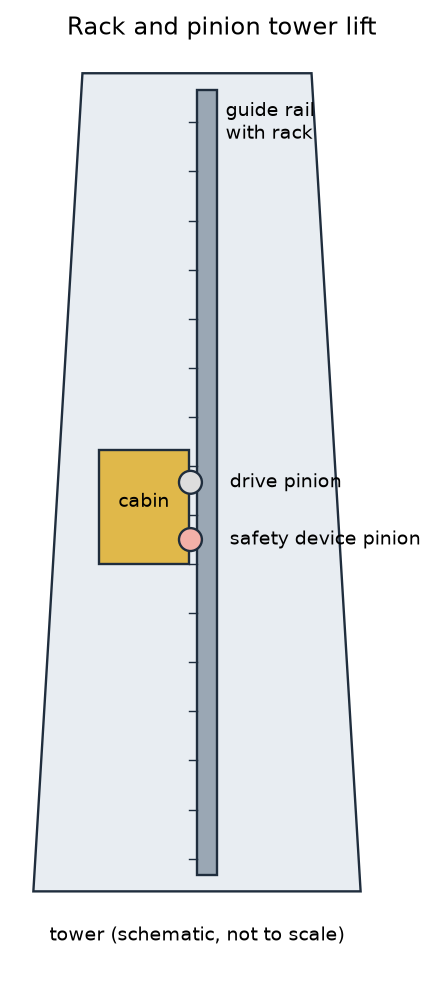
Drive and safety pinions on a tower rail rack
Summary
A rack tower lift is a vertical hoist in a narrow, humid tube. Its racks need hoist-grade joint control plus serious corrosion protection.
For drawings, samples or a quotation, send us your rack, pinion or gear specification and quantity.
