 EN

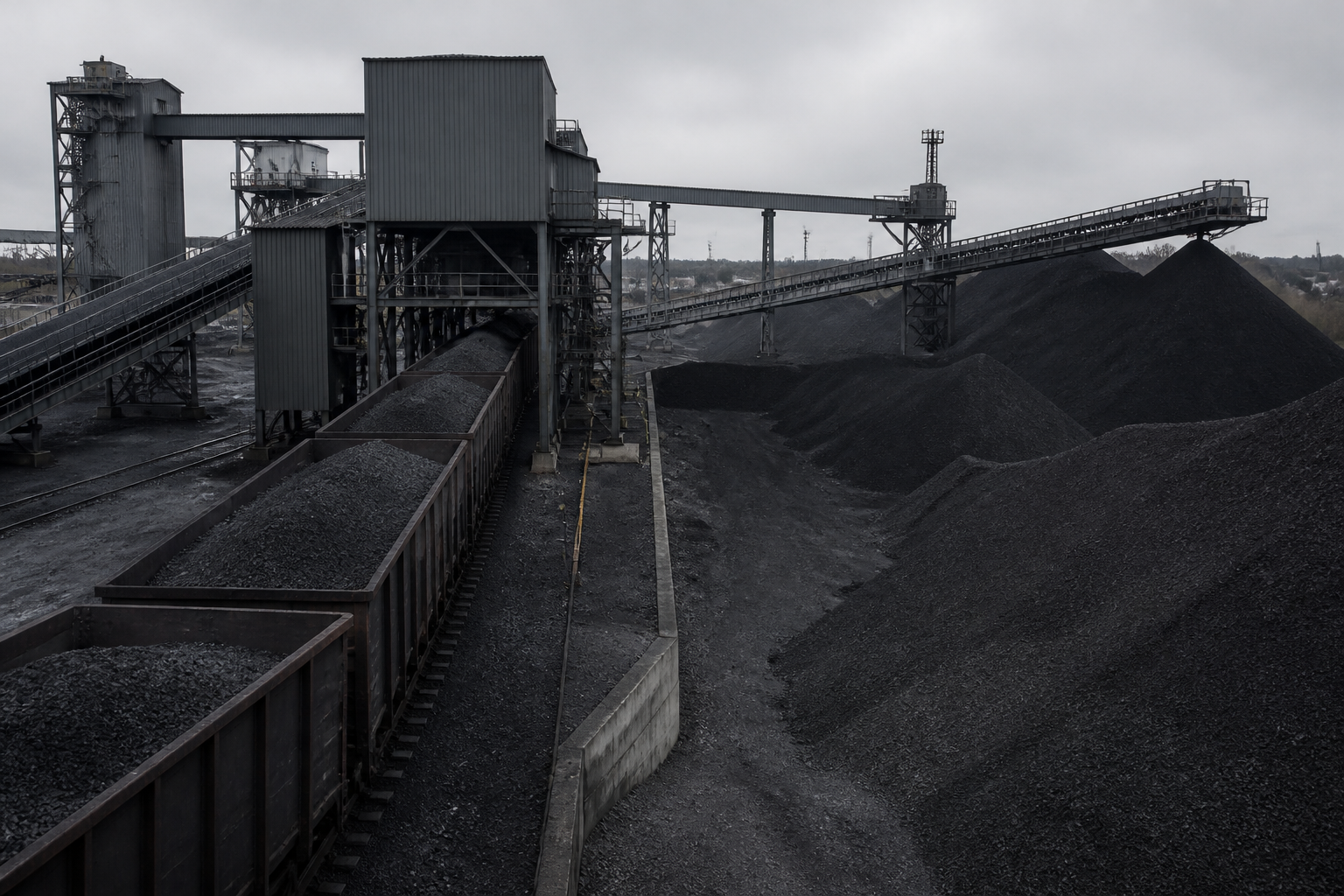
Bulk coal handling yard
A rail car positioner can pull a full train of loaded wagons, starting from rest, dozens of times a shift - with coal or ore dust everywhere. That combination decides how the rack must be built.
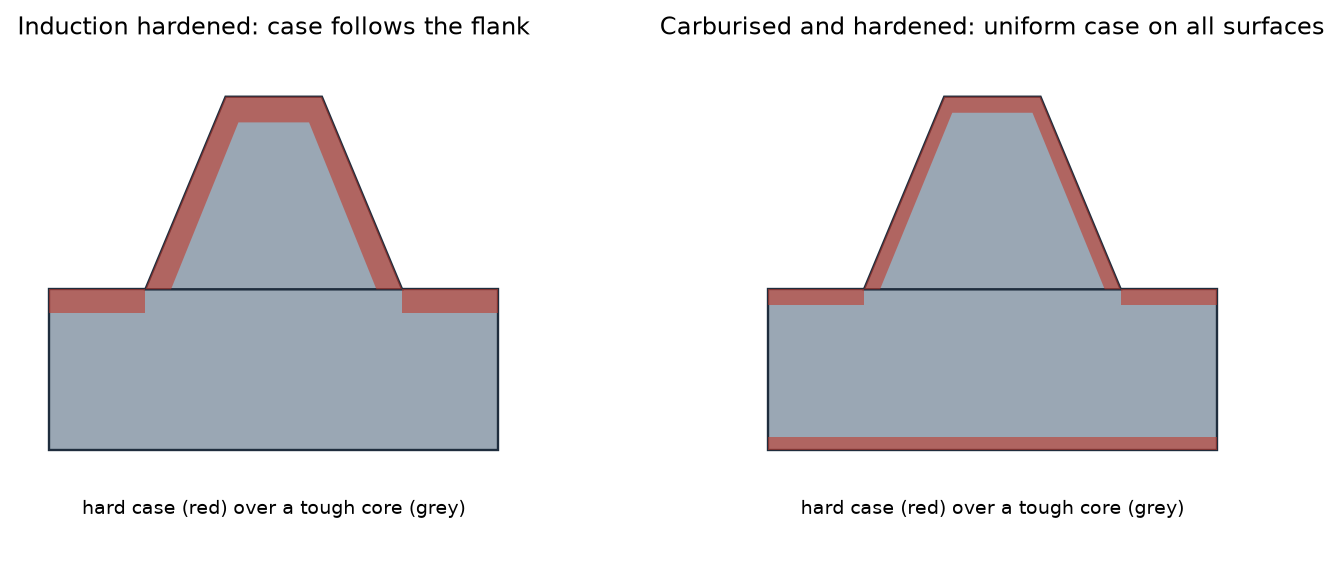
Hard flank over a tough core for shock-loaded racks
Shock first
The peak load on a heavy rack drive is usually the start: breaking a loaded train or a stuck gate free. Peak tooth force can be several times the running force, so the design must be based on peak torque, with a suitable service factor.
· Tough core: quenched and tempered 42CrMo or 40Cr, then induction-hardened flanks. A through-hard brittle rack cracks at the root.
· Spur teeth: no axial thrust and no sensitivity to small misalignment of long tracks.
· Larger pinion: Ft = 2T / (z x m). More teeth reduce tooth force and impact.
Dust second
Coal, ore and cement dust sticks to grease and turns it into a lapping paste. Wear accelerates where grease is left in place for long periods.
· Keep racks accessible for cleaning; avoid channels that pack with dust.
· Replenish lubricant regularly, or use automatic lubrication, so contaminated grease is pushed out.
· Mount teeth sideways or downward where the structure allows.
· Inspect joints: a loose joint concentrates impact.
| Design choice | Reason |
| Spur teeth | No axial force; robust on long tracks |
| Q&T alloy core | Resists root cracking under shock |
| Induction-hardened flanks | Resists abrasive wear |
| Pinion 17 teeth or more | Lower tooth force, no undercut |
| Accessible racks | Cleaning and inspection possible |
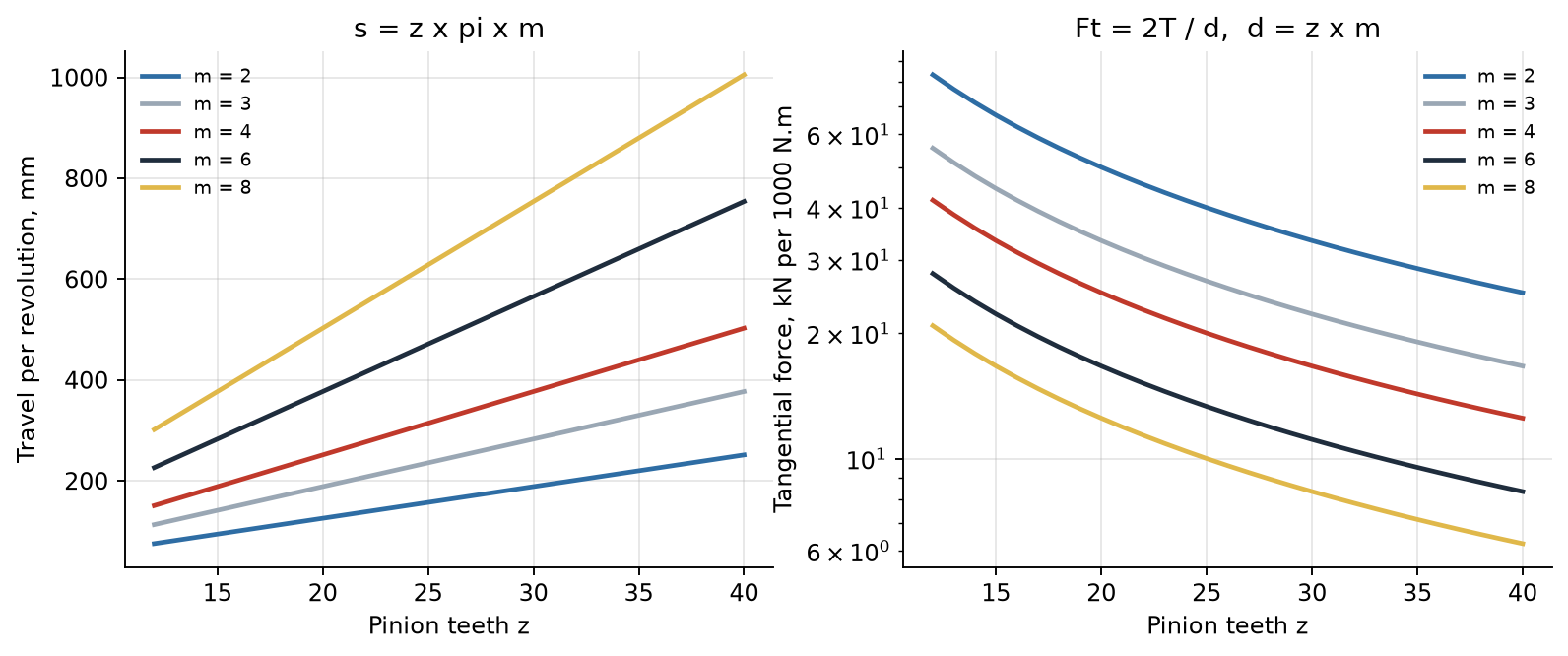
Larger pinions lower tooth force for the same torque
Summary
Size for the start, protect against dust, and keep the rack where someone can clean it. The tooth grade is the last thing to decide.
For drawings, samples or a quotation, send us your rack, pinion or gear specification and quantity.
