 EN

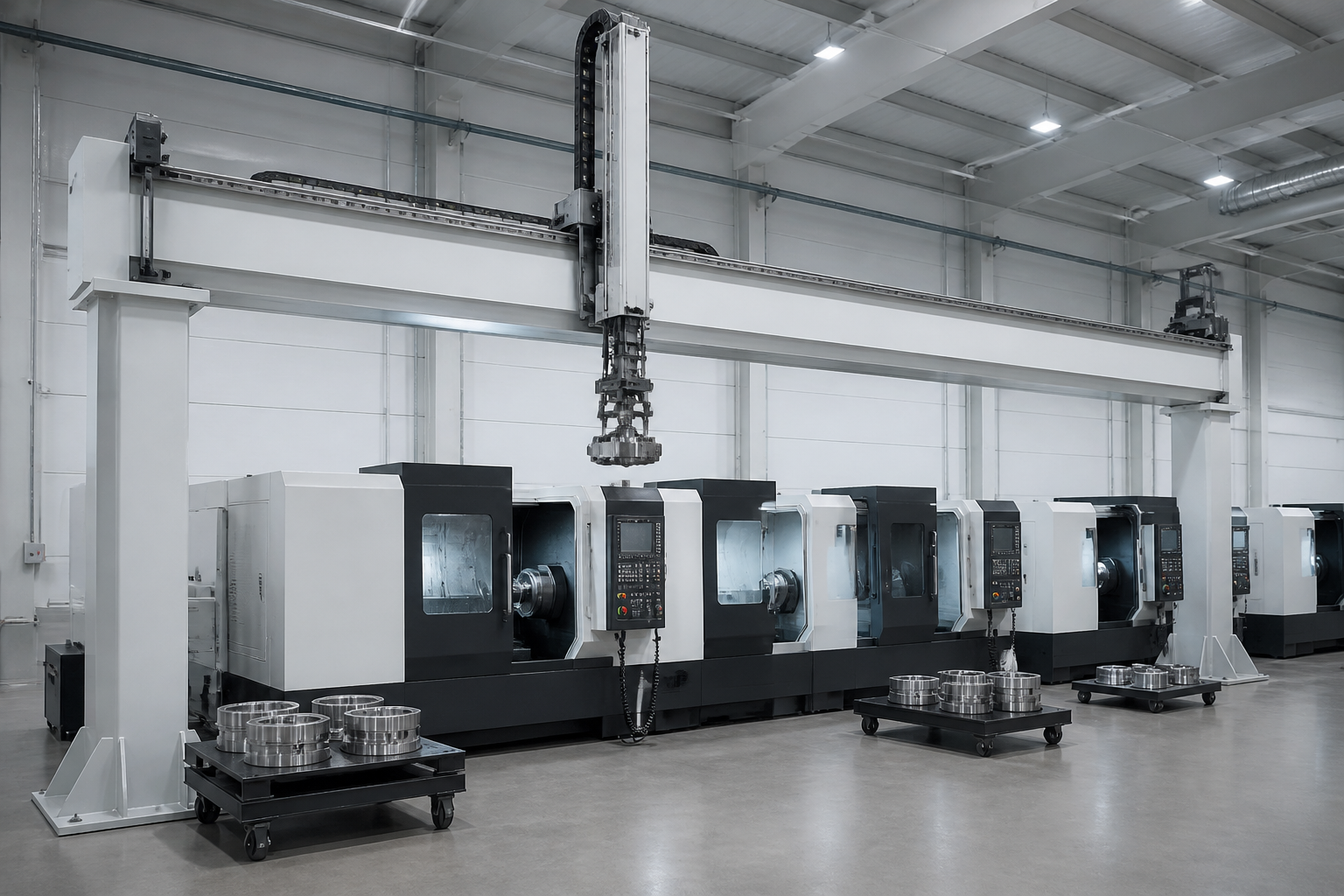
Servo-driven gantry automation
On a reversing servo axis, the first backlash is often not in the rack or gearbox but between pinion and shaft.
The keyway
A parallel key transmits torque by shear and bearing on the key sides. It is simple, cheap and standardised (DIN 6885). But the key needs fit clearance, and on reversing loads the pinion rocks within it. Over time the key and keyway wear, the clearance grows, and the axis develops lost motion.
The locking assembly
A keyless locking assembly uses tapered rings tightened by screws to press radially on both shaft and hub. Torque is carried by friction:
T = p x pi x d x L x mu x d / 2
where p is contact pressure, d shaft diameter, L contact length and mu the friction coefficient. Rated torque and screw tightening torque come from the locking assembly maker.
| Keyway | Locking assembly | |
| Backlash at shaft | Fit clearance; grows with wear | None when correctly tightened |
| Positioning | Fixed by key | Any angle and axial position |
| Shaft weakening | Keyway notch | None |
| Removal | May need pulling | Loosen screws |
| Cost | Lowest | Higher |
| Overload | Key shears or deforms | Can slip if under-tightened |
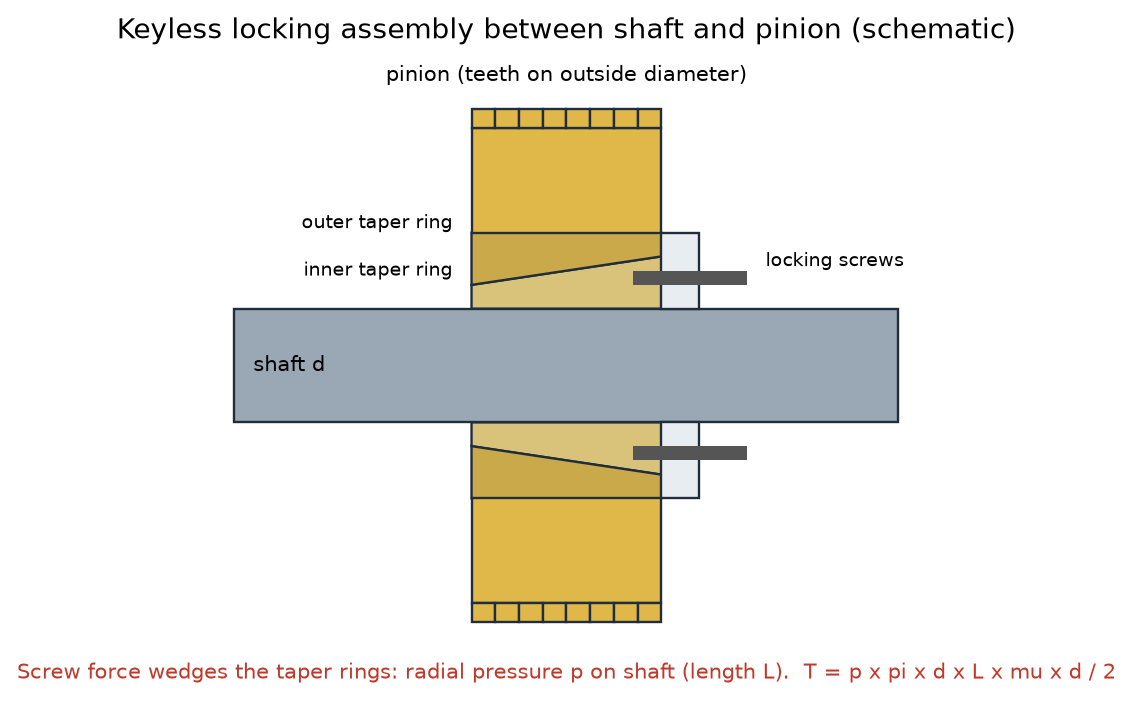
Taper rings wedged by screws create radial pressure
Where locking assemblies pay off
· Reversing servo rack axes.
· Dual-pinion drives that must be phased to cancel backlash.
· Machines where the pinion must be aligned to a rack tooth during assembly.
· Retrofits onto plain shafts.
Installation points
· Clean contact surfaces as the maker specifies.
· Tighten screws in steps, crosswise, to the specified torque.
· Re-check torque after initial running.
Summary
Keyways are fine for one-direction drives. On reversing, positioning rack axes, a locking assembly removes a source of backlash before it starts.
For drawings, samples or a quotation, send us your rack, pinion or gear specification and quantity.
