 EN

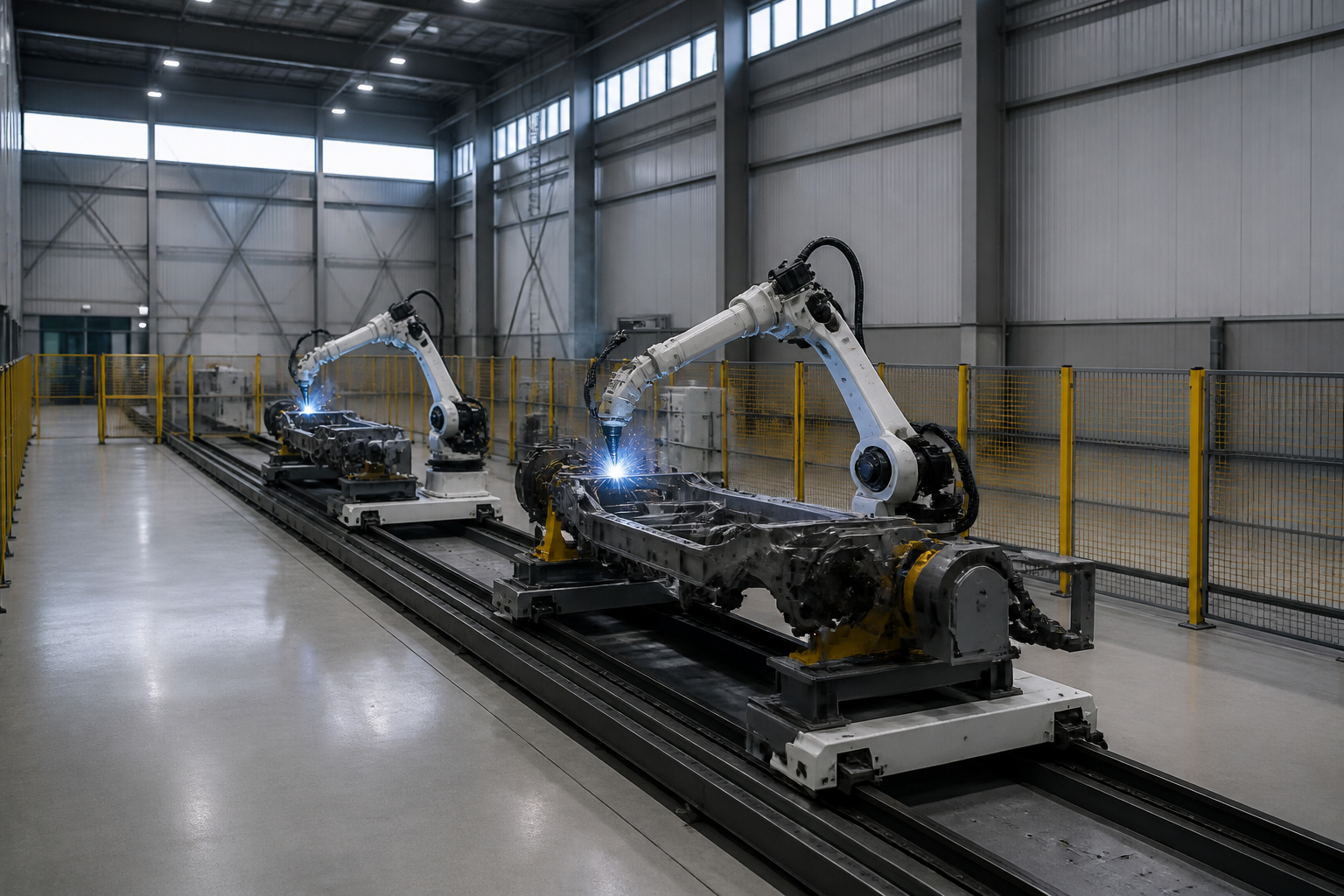
Robot cell with long-travel floor track
Ordering the most accurate rack available is the easiest way to overspend on a machine. Ordering too coarse a rack is the easiest way to lose positioning. The process tells you which one you are buying.
Two processes
A milled rack has its teeth cut, then usually induction hardened. Hardening distorts the rack slightly, and that distortion stays. A ground rack is hardened first and then ground, so the final tooth geometry is produced on hard steel and the distortion is removed.
| Precision milled | Ground after hardening | |
| Typical accuracy | DIN 8 / DIN 9 | DIN 5 / DIN 6 |
| Process order | Cut, then harden | Harden, then grind |
| Cost | Lower | Higher |
| Typical machines | Conveyors, transfer carts, gates, woodworking | Robot 7th axis, precision gantries, laser and machining |
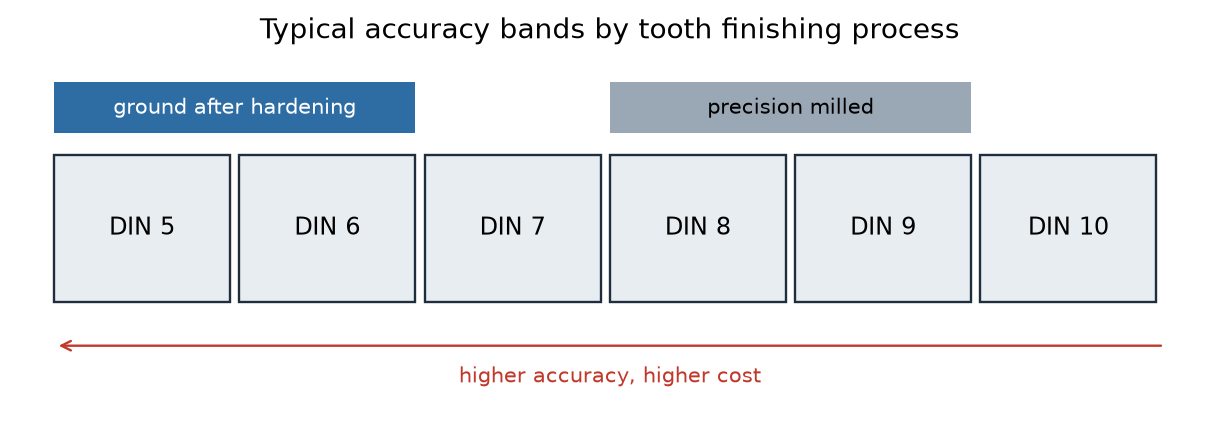
Ground racks at DIN 5-6, milled at DIN 8-9
How to choose
· Start from the required positioning at the tool or load, not from the rack catalogue.
· Remember everything else in the chain: gearbox backlash, pinion runout, joint errors and frame deflection. A DIN 5 rack on a flexible frame does not give DIN 5 positioning.
· Count the joints: long axes with many short racks accumulate joint errors whatever the grade.
· Mix where it makes sense: a ground section at a precision station and milled sections elsewhere, if the pinion and backlash allow.
Typical matches
| Application | Usual choice |
| Robot 7th axis, welding and machine tending | Ground, DIN 5-6 |
| Laser and plasma cutting gantries | Ground or high-grade milled |
| Woodworking routers | Milled DIN 7-8 (dust and material movement dominate) |
| Conveyor transfer and shuttles | Milled DIN 8-9 |
| Gates and agricultural equipment | Milled or cut, coarser grades |
Summary
Grade follows process: ground for DIN 5-6, milled for DIN 8-9. Buy the grade the whole machine can use.
For drawings, samples or a quotation, send us your rack, pinion or gear specification and quantity.
