 EN

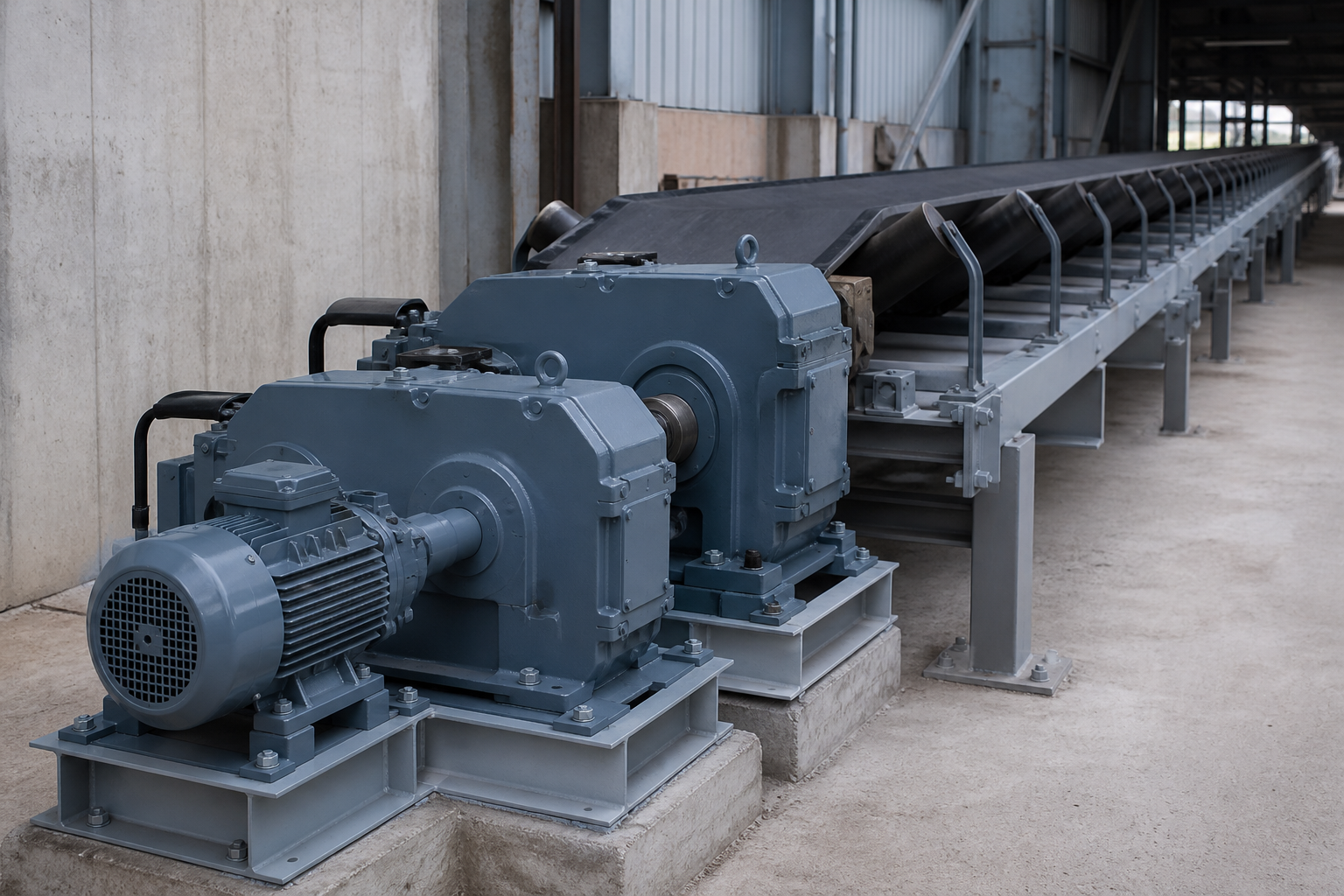
Gear reducers in a bulk material plant
Two parts can both be called 'hardened' and behave completely differently. How the case was made decides how deep it is, where it is, and whether the part needs grinding afterwards.
Carburising
Low-carbon alloy steels such as 20CrMnTi, 20CrMo or 16MnCr5 are heated in a carbon-rich atmosphere so carbon diffuses into the surface, then quenched and tempered. The result is a high-carbon hard case - typically HRC 58-62 - over a tough low-carbon core, on all surfaces of the tooth including the root.
The process takes long and distorts the part, so precision gears are ground after carburising. It is the standard route for highly loaded gearbox gears.
Induction hardening
Medium-carbon steels such as C45, 40Cr or 42CrMo are heated locally by an induction coil and quenched. Only the heated zone - usually the tooth flanks - hardens. Distortion is lower, and long parts such as racks are practical to treat. Typical rack hardness is HRC 45-55.
| Carburising | Induction hardening | |
| Steels | Low-carbon alloy (20CrMnTi, 16MnCr5) | Medium-carbon (C45, 40Cr, 42CrMo) |
| Typical surface hardness | HRC 58-62 | HRC 45-55 on racks |
| Hardened zone | All surfaces, uniform case | Local (flanks), pattern depends on coil |
| Distortion | Higher - grinding usually required | Lower |
| Typical parts | Gearbox gears, pinions | Racks, large gears, shafts |
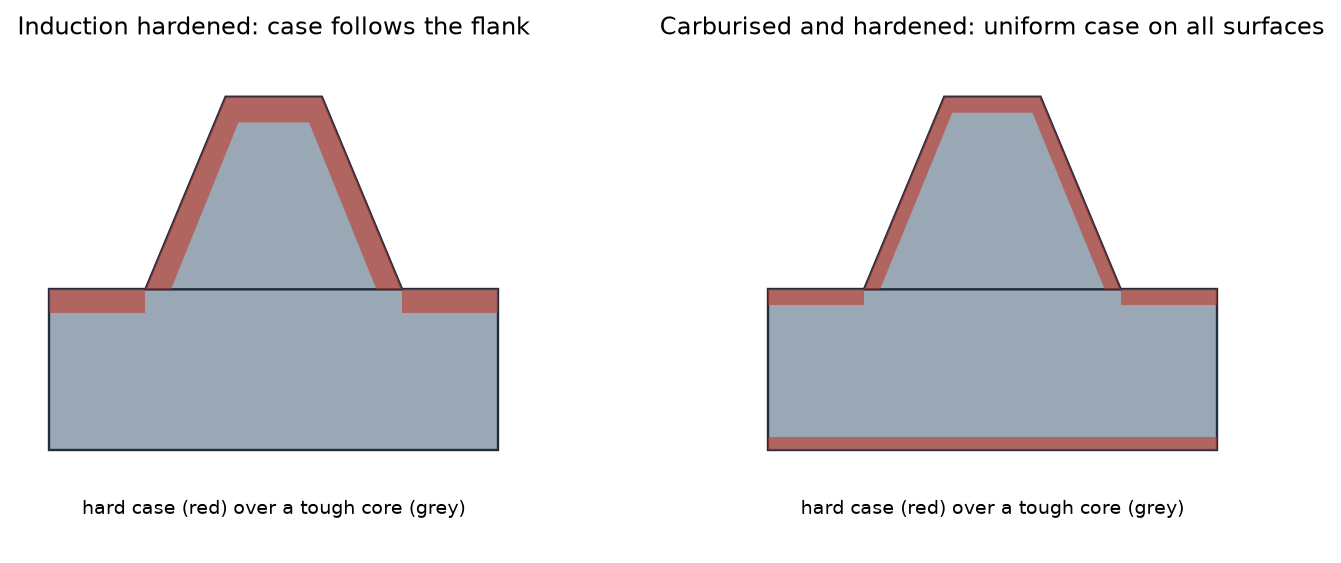
Case on the flank (induction) versus uniform case (carburised)
Choosing
High contact stress and compact size (gearbox stages): carburise and grind.
Long racks and large parts: induction harden.
Shock loads (mining, hoists): ensure a tough core - quenched and tempered alloy steel under the case.
Put hardness, case depth and the treatment route on the drawing; 'hardened' alone is not a specification.
Summary
Carburising for maximum surface strength with grinding; induction hardening for racks and large parts with less distortion. Specify which, and to what values.
For drawings, samples or a quotation, send us your rack, pinion or gear specification and quantity.
