 EN

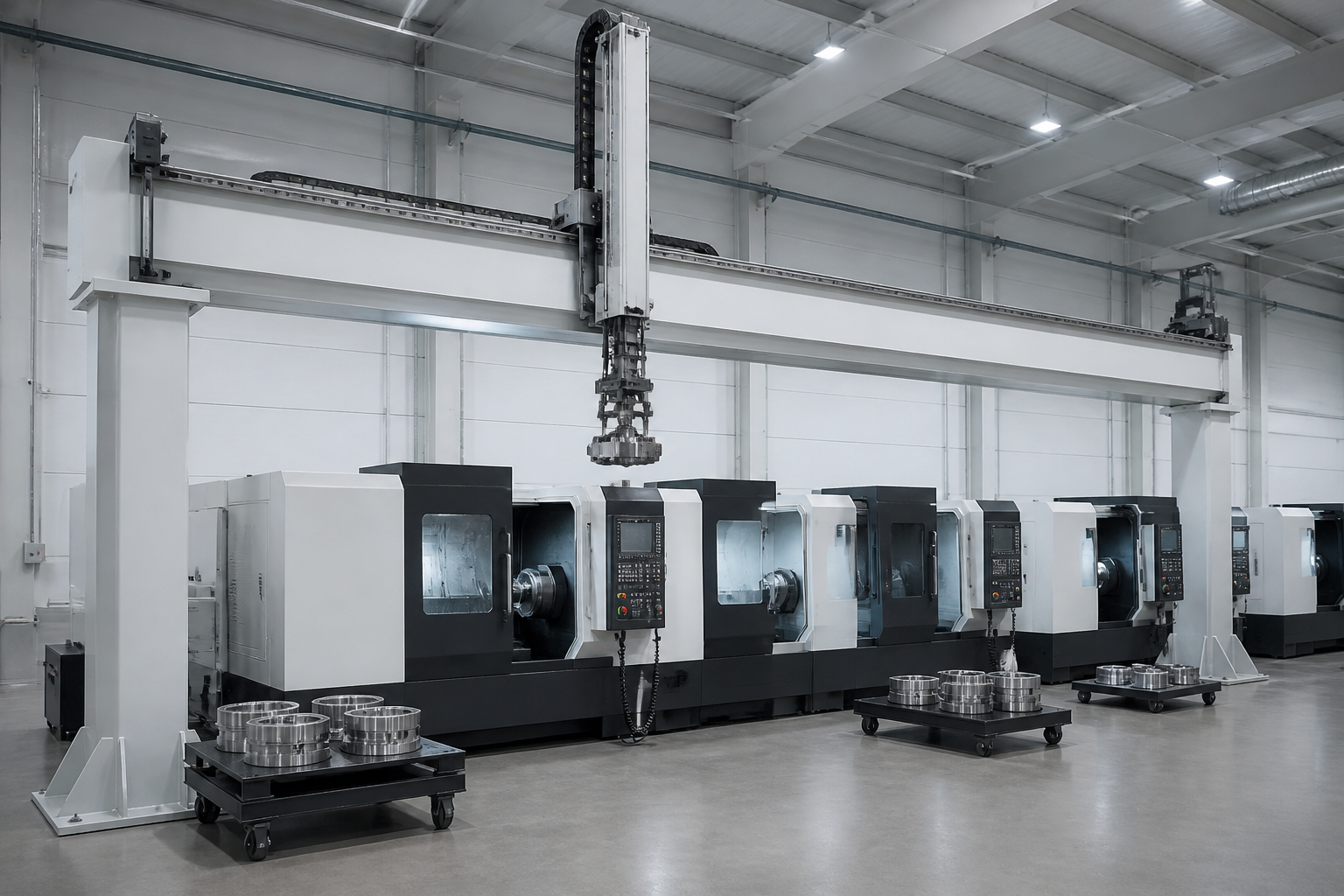
Gantry automation in a machining cell
Small pinions are attractive on rack drives: more travel resolution, lower gearbox ratio, smaller carriage. Below a certain tooth count, though, the cutter removes part of the tooth root - and the pinion gets weaker, not just smaller.
Where undercut comes from
Pinions are generated by a cutter with the rack tooth form. If the pinion is small, the tip of the cutter reaches inside the base circle and cuts away part of the involute at the root. For a standard tooth (addendum = 1 m), undercut starts when the tooth count falls below:
z min = 2 / sin^2(alpha)
| Pressure angle | 14.5 deg | 20 deg | 25 deg |
| Theoretical z min | 31.9 | 17.1 | 11.2 |
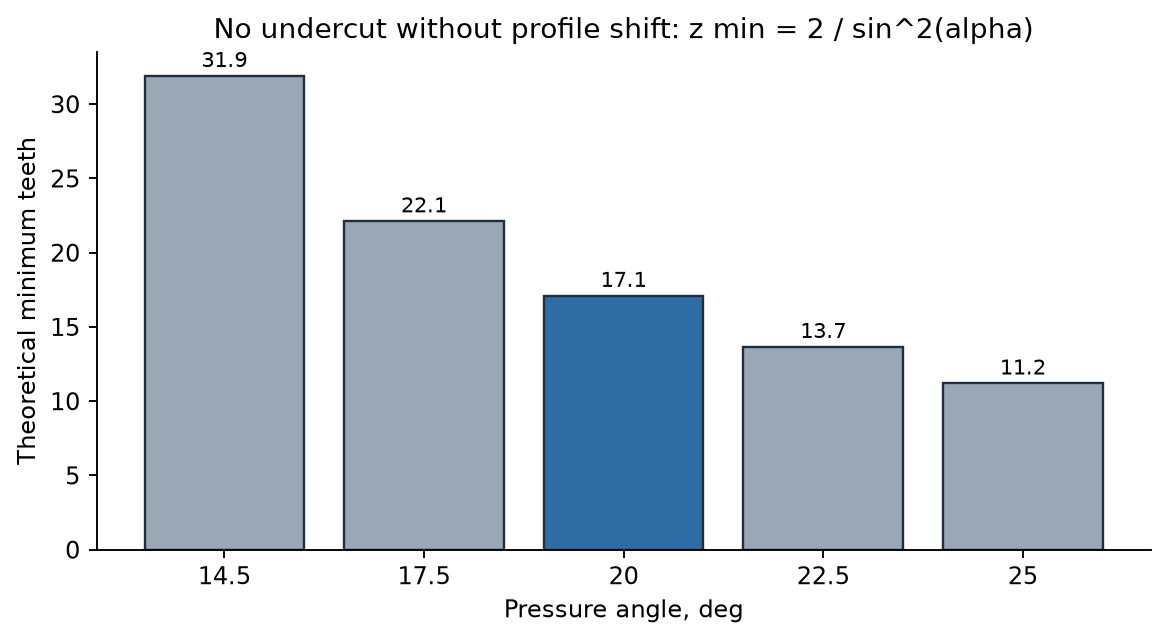
At 20 deg, standard pinions below 17 teeth undercut
Why it matters on rack drives
· Undercut thins the tooth root, lowering bending strength exactly where the stress is highest.
· It shortens the usable involute, reducing contact ratio.
· In practice a slight undercut is often accepted at 14-16 teeth; below that, it becomes significant.
Profile shift
Moving the cutter outward during generation (a positive profile shift x x m) keeps the cutter tip out of the base circle. The pinion gets a thicker root and no undercut. For a rack drive, the pinion centre distance to the rack pitch line increases by x x m, which must be reflected in the mounting.
Design checklist
· Prefer 17 teeth or more for standard pinions at 20 deg.
· Below that, specify profile shift and give the shift coefficient on the drawing.
· Check the rack-to-pinion centre distance with the shift included.
· Remember that a larger pinion also lowers tooth force: Ft = 2T / (z x m).
Summary
17 teeth is not a superstition: it is 2 / sin^2(20 deg). Go smaller only with profile shift.
For drawings, samples or a quotation, send us your rack, pinion or gear specification and quantity.
